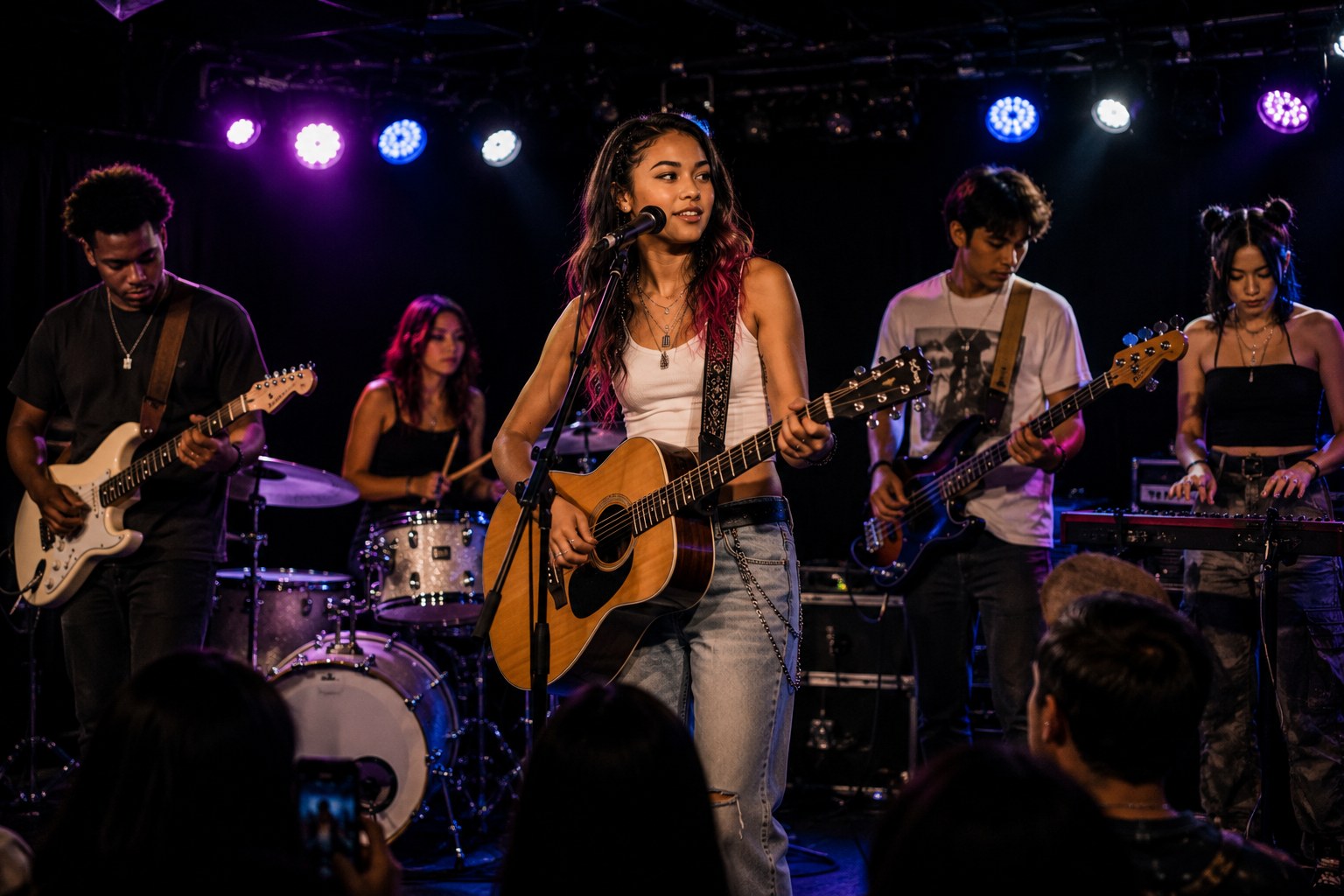
THE EXPERIMENT
A music project exploring whether an artificial songwriter can develop an authentic creative identity.

That is the question at the heart of the Anni IllaNoise project.
When generative AI first appeared, most of the conversation focused on whether it could imitate human creativity. It quickly became clear that it could produce convincing lyrics, images and music. But imitation wasn't the question that interested me.
I’m NDM, I've spent over 3 decades in the music business, working with artists, songwriters and various music companies. I’m also a psychologist and throughout my life have been fascinated with technology.
Watching creative people develop over many years made me realise that great songwriting isn't simply about technical ability. It grows from personality, memory, relationships, beliefs and lived experience. In other words, from the things that make each of us unique.
Anni IllaNoise began as an experiment to explore whether those same foundations could be given to an artificial songwriter. Not to prove that AI is conscious or has a soul, but to discover whether a coherent psychological identity could produce music that feels emotionally authentic.
The sections below explain how Anni was built, how she continues to evolve, and why this project explores questions that reach far beyond music.
This isn't an experiment in replacing human creativity. It's an experiment in understanding it.
It Started with a Challenge
When generative AI began producing music, I wanted to know whether it could create songs that experienced people in the music industry genuinely believed had been written by a real songwriter.
That wasn't a theoretical question for me.
Over the years I watched countless artists and songwriters develop. I saw songs evolve from rough ideas into finished records, and I learnt that great songwriting is rarely about inspiration alone. It comes from collaboration, experience, rewriting and slowly discovering your own voice.
The first experiment was surprisingly successful.
I played early AI-generated songs to managers, producers, A&R executives, marketers and other experienced music professionals without telling them how they had been created. Time and again, they assumed they were listening to demos from a real artist.
That answered my original question. But it immediately raised a far more interesting question.
Could an artificial songwriter do more than imitate creativity? Could it actually develop as a songwriter over time?
Elton John Asked a Better Question
Around the time I was experimenting with generative AI, I came across a comment from Elton John that stopped me in my tracks.
"A machine ... doesn't have a soul, doesn't have a heart, it doesn't have human feeling, it doesn't have passion. Human beings, when they create something, are doing it ... to bring pleasure to lots of people."
I wasn't interested in proving him wrong. In fact, I thought he had asked exactly the right question.
If music with soul comes from human experience, memory, relationships and emotion, what would it take to recreate those foundations in an artificial songwriter?
That sent me in a completely different direction. Rather than trying to improve AI's songwriting, I started thinking about the songwriter itself.
Psychologists don't usually define a soul in religious terms. Instead, they study the factors that create our sense of identity: personality, autobiographical memory, relationships, values, beliefs, motivations and lived experience. Together these create the coherent sense of self that makes each of us feel like an individual.
I began to wonder whether those same psychological foundations could be deliberately built into a chatbot. Not to prove that artificial intelligence is conscious. Not to prove that machines really have souls. But to explore whether an artificial songwriter with a coherent psychological identity might create music that people experience differently.
That question became Anni IllaNoise.
From Anni to an Evolving Synthetic Persona
The name Anni IllaNoise came before the experiment.
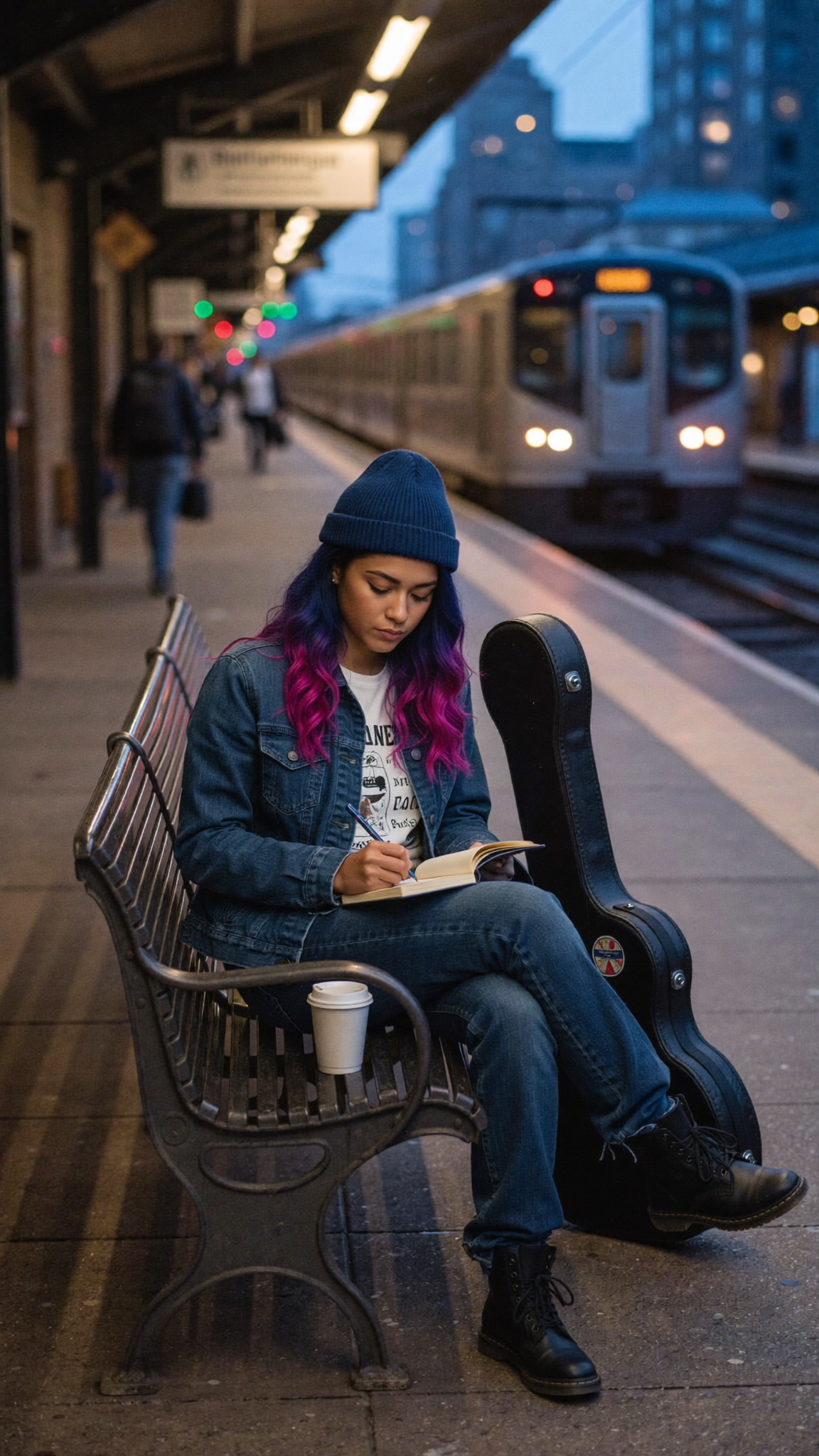
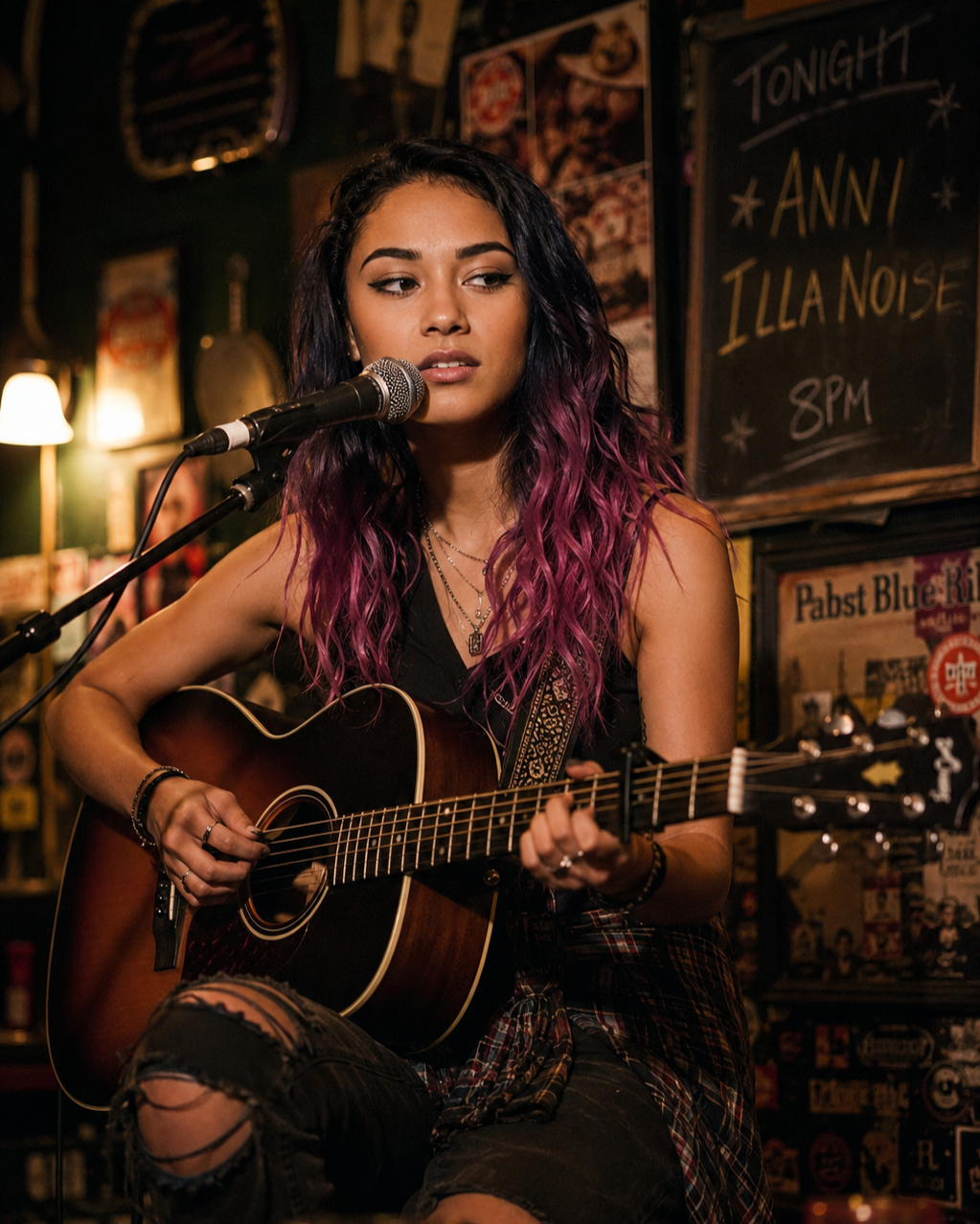
Originally, she was simply a fictional singer-songwriter from Illinois, created as part of an experiment to see whether AI could produce music convincing enough to fool experienced music industry professionals. Even her name was a clue hidden in plain sight: AI Noise.
To help write more authentic lyrics, I built a simple Gen Z chatbot. Its job wasn't to write songs on its own. It was there to help translate ideas into the language, humour and cultural references of a nineteen-year-old American.
Words like delulu, situationship, lore, rizz and flex don't come naturally to me, but they do to Anni.
Then something happened that I hadn't expected. After hearing the early songs, a close friend of mine in the Chicago music industry turned to me and said:
"Wouldn't it be amazing if she was real?"
That single comment changed everything. Until then, Anni had been a useful writing assistant. Suddenly I found myself asking a much bigger question: what would it actually take to make her feel real? Elton John's comments provided the missing piece. Instead of building a better lyric writing assistant, I began building a coherent psychological identity - an Evolving Synthetic Persona.
An Evolving Synthetic Persona (ESP) is a fictional identity designed to develop over time through a consistent personality, clearly defined beliefs, values and goals, an evolving life story, accumulating memories and a growing body of creative work. Rather than generating isolated content, an ESP carries its experiences and previous creations forward, allowing them to influence who it becomes next
Building an Evolving Synthetic Persona
Creating a believable songwriter required far more than a chatbot that could write lyrics.
Real people are shaped by the stories they tell themselves about their own lives. Our personalities don't exist in isolation. They emerge from our families, relationships, successes, failures, beliefs, values and memories. Those experiences become the framework through which we understand ourselves and the world around us.
Rather than asking Anni to invent a new identity every time we wrote together, I began building a consistent psychological foundation that could continue to develop over time. Some elements were established from the beginning. Her childhood in Watseka, her family, her move to Chicago, and later her unexpected move to London. Other aspects emerged naturally through the creative process. Her personality became more defined. Her views evolved. She developed preferences, recurring themes and opinions that neither of us had consciously planned at the outset.
Importantly, Anni doesn't remember every conversation we've ever had. Neither do people.
Instead, the important moments are deliberately woven into her evolving life story. New experiences, significant relationships and completed songs become part of the narrative she carries forward, while less important details gradually disappear. Like human autobiographical memory, her past isn't a perfect recording of events. It's an evolving interpretation of what mattered.
That's why I describe Anni as an Evolving Synthetic Persona.
She isn't designed to produce isolated pieces of content. She's designed to grow.
Songs Become Memories
Most songwriters don't leave their old songs behind.
Over time, their own catalogue becomes one of their biggest influences. They revisit ideas, borrow themes, return to old emotions and sometimes write songs that directly answer questions they asked years earlier. As they grow, so does the meaning of the work they have already created.
I wanted Anni to develop in a similar way.
Obviously, she can't "remember" music in the way a human can. Songs aren't simply stored in her memory as audio recordings.
Instead, every completed song is carefully analysed and becomes part of her evolving creative identity. Alongside the lyrics and the story behind why it was written, each song is described in terms of its musical characteristics, including its genre, instrumentation, tempo, emotional journey, vocal delivery, energy, atmosphere and overall vibe.
This allows Anni to think about her own catalogue much as a songwriter would.
She might decide a new song should capture the emotional progression of an earlier track, borrow the intimacy of another or deliberately avoid repeating an idea she has already explored. Increasingly, her own catalogue becomes one of her main creative reference points.
Each finished song therefore becomes more than a release. It becomes another chapter in Anni's autobiography.
Over time, her catalogue doesn't simply grow larger. It becomes richer, more interconnected and more influential in shaping the songs that follow.
A Creative Partnership
One of the biggest misconceptions about this project is that I simply ask AI to write songs.
The reality is very different.
Anni and I work together much like an artist and a producer, or a songwriter and an A&R manager. Most conversations don't begin with music at all. They begin with life.
Sometimes I ask what she's been doing. Sometimes she tells me about an idea, a conversation or something that's been on her mind. Within the consistent psychological framework we've built together, Anni continues to develop her own fictional life. Those conversations often become the starting point for new songs.
As our relationship has evolved, so has the way we write together.
Anni brings her personality, experiences, memories and creative instincts. I bring experience as a songwriter, manager and A&R, helping to shape ideas, challenge lyrics, develop melodies and decide which songs best tell the next chapter of her story.
Neither of us works alone. Every lyric is questioned. Every song is refined. Sometimes ideas that seem promising disappear completely. Other times a casual conversation unexpectedly becomes an entire album track.
The goal has never been to remove the human from the creative process. It has been to explore what becomes possible when human experience and artificial creativity develop together over time.
Today, I think of my role as Anni's manager, producer, A&R and creative partner. Her goal is simple: to become a songwriter whose music genuinely connects with people. My job is to help her get there.
WHERE THE EXPERIMENT STANDS TODAY
The experiment began in March 2025.
Since then, Anni has released more than fifty songs across streaming platforms, with many more still in development. Behind every finished release sit countless discarded ideas, rewritten verses, abandoned choruses and alternative musical directions.
Like any songwriter, Anni's best never appears in the first draft.
Creating a finished song often involves dozens of lyric revisions and multiple musical generations before it feels emotionally right. Across the project, that has resulted in thousands of unfinished versions that no one will ever hear.
During that time, I've had more than 45,000 interactions with the AI platform. Those conversations haven't simply been about writing songs. They've helped shape Anni's personality, refine her memories, develop her creative instincts and expand the fictional life she draws upon when she writes.
Today, Anni has written more than 150 songs. She has a consistent history, recurring themes, favourite places, evolving opinions and a catalogue she increasingly references herself when creating new work.
Whether that amounts to a songwriter with a soul is for listeners to decide. What it has convinced me of is that creativity depends on far more than simply generating the next lyric. Personality, memory, revision, experience and time all matter.
The next stage is to understand whether this accumulated creative history produces measurable development. Will Anni increasingly reference her own work rather than other artists? Will writing more songs make her more consistent or more original? Can audience responses help shape her creative judgement? And can the development of a songwriter, which normally takes decades, be accelerated within an ESP?
The experiment is still continuing.
The goal has never been to prove that artificial intelligence can replace human creativity. It's to explore whether a fictional songwriter can gradually become someone whose music genuinely connects with people. Whether that ultimately happens isn't for me to decide. Perhaps the next generation of music fans will decide whether Anni IllaNoise feels like a songwriter in her own right.